
Heating and Cooling System Options for Cleveland Homes
Five common setups side by side, so you can narrow the choice before a load calculation sets the size.
Choosing a heating and cooling system starts with the house: its ducts, its fuel, the rooms that need help and how you want it to feel. Archwood Heating & AC installs gas furnaces, central air conditioners and heat pumps, and sizes each one to the house and its ductwork instead of matching whatever was there.
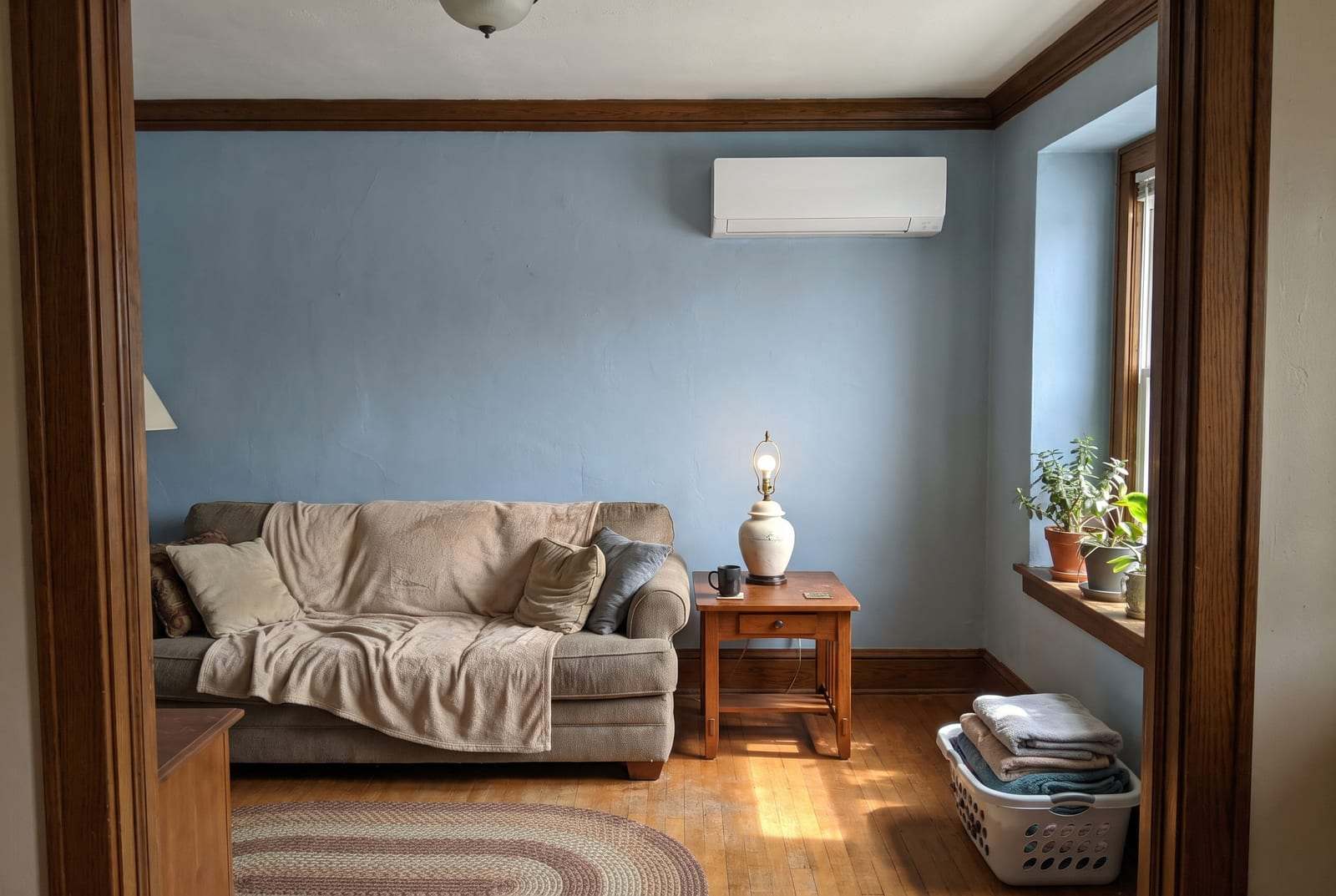
Five Systems Side by Side
Swipe the table to see all columns.
| Option | How it heats | How it cools | Works with existing ductwork | Energy source | Best suited to | Points to weigh |
|---|---|---|---|---|---|---|
| Gas furnace with central AC | Gas burners warm a heat exchanger; a blower moves the air | Outdoor condenser and a coil on top of the furnace | Yes, if the ducts carry enough air for cooling | Natural gas and electricity | Houses with gas service and sound ducts | Hot air in deep cold; venting and carbon monoxide safety; two units to keep up |
| Air-source cold-climate heat pump | Pulls heat from the outdoor air with refrigerant | The same unit runs in reverse | Usually, sometimes with a larger return | Electricity | Tight, well-insulated houses, or houses without gas | Output drops as it gets colder; backup heat strips; defrost cycles; a larger electrical load |
| Dual-fuel system | Heat pump on mild days, gas furnace in deep cold | The heat pump | Yes, on the furnace’s ducts | Electricity and natural gas | Houses with gas that want to burn less of it | Two systems to maintain; the switchover setting decides how it runs |
| Ductless mini-split | Outdoor unit feeds heads on the walls or ceilings | The same heads | Doesn’t need ducts | Electricity | Boiler houses, finished attics, additions and single problem rooms | One head per room or open area; heads show on the wall; filters to rinse |
| Electric furnace with central AC | Electric heating elements in an air handler | Condenser and a coil in the air handler | Yes | Electricity | Houses with no gas line and a large electrical service | No combustion, but the costliest heat to run through a long winter; may need a service upgrade |
Gas Heat Versus a Heat Pump in a Lake-Effect Winter
A gas furnace makes the same heat at 5°F as at 40°F. A heat pump moves heat out of the outdoor air, and its output and efficiency fall as the temperature drops. Cold-climate models keep heating into the single digits and below, but most still carry electric backup strips for the coldest stretch and pause to defrost when frost builds on the outdoor coil.
That makes the balance point the number to know: the outdoor temperature below which the heat pump alone can’t keep up with the house. A tight, well-insulated house has a low balance point; a drafty one with old windows has a high one. A dual-fuel system lets the heat pump carry the mild days and hands the coldest ones to a gas furnace.
The heat feels different too. Furnace air leaves the registers hot, in shorter cycles. Heat pump air is warmer than the room but cooler than furnace air, and it comes in longer, steadier cycles. Some people like the even heat; others miss the blast of warm air on a January morning.
Ductwork Decides a Lot
Air conditioners and heat pumps move more air than many older furnaces were ducted for, so a cooling or heat pump system on undersized ducts runs loud, at high static pressure and short of capacity. A static pressure reading shows whether the existing ducts will do, need a larger return, or need real changes.
Houses heated by a boiler have no ducts at all, so cooling usually means ductless mini-splits: an outdoor unit, refrigerant line sets through the wall and indoor heads in the rooms that need them. Many also heat well enough to carry spring and fall while the boiler handles deep winter.
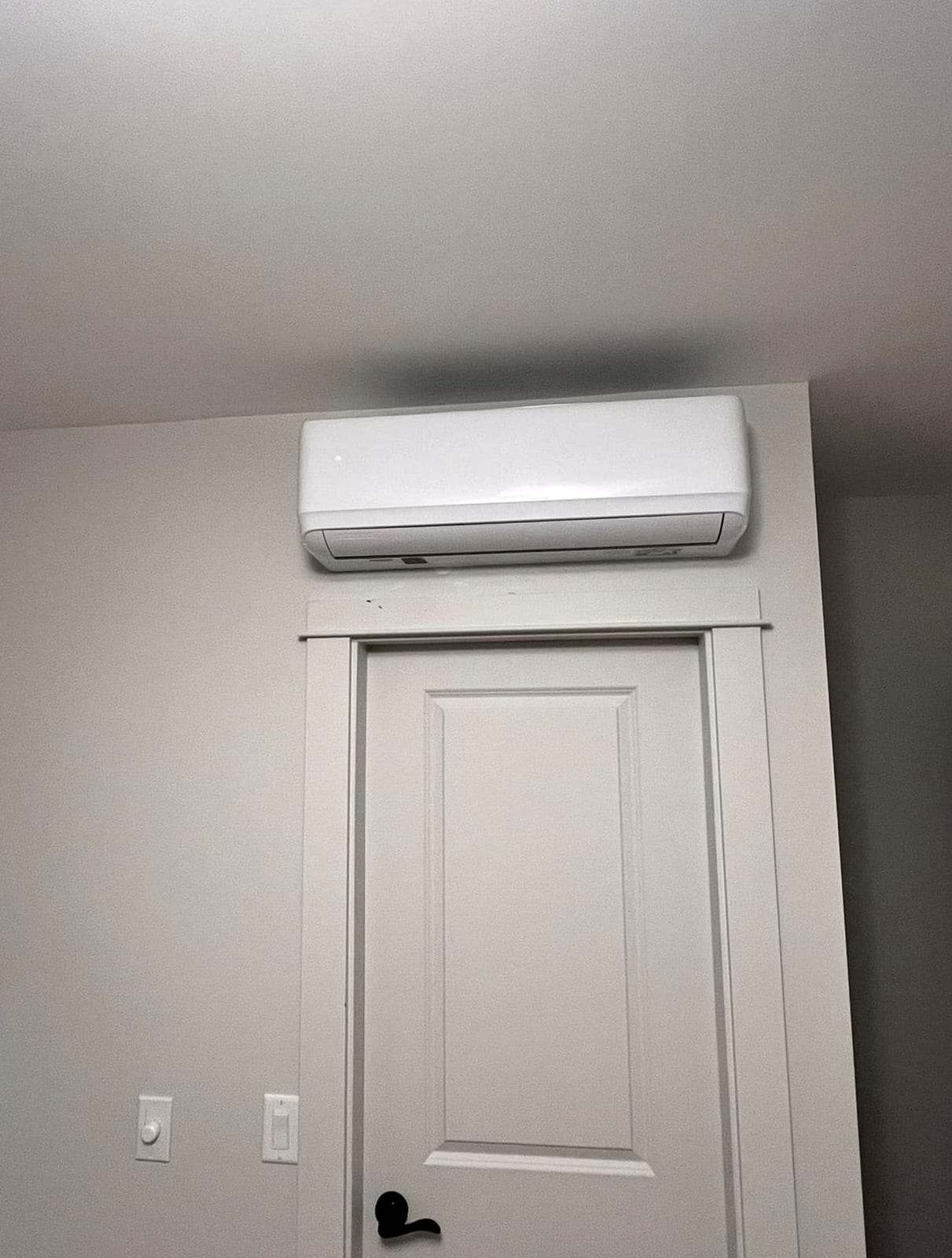
Heads go high on a wall with a clear path for the condensate line, and their filters need rinsing about monthly in heavy use. One head trying to cool three rooms through doorways leaves the far rooms short.
Five Questions That Narrow the Choice
- Home layout: one story or three, open rooms or closed-off bedrooms, a finished attic or an addition.
- Ductwork: whether the house has ducts, and whether they are big enough, sealed and reaching every room.
- Fuel available: natural gas at the house, and the size of the electrical service.
- Rooms to condition: the whole house, one floor, or a couple of problem rooms.
- Comfort priorities: hot air or steady even heat, quiet indoor units, summer humidity control, lower gas use.
The answers point to a type. The size comes from a room-by-room load calculation (Manual J) that accounts for walls, windows, insulation and air leakage. When it’s time to replace, the new system is sized to the house from that number, not from the old unit’s label.
Heat Pumps and Furnaces in Northeast Ohio
Can a heat pump heat a house in northeast Ohio through the whole winter?
A cold-climate heat pump can, if it’s sized for the house’s heat loss at the coldest design temperature and the house isn’t too leaky. Most installations still carry backup heat strips or a gas furnace for the coldest days. A standard heat pump without cold-climate ratings loses too much output in deep cold to carry a house alone.
When does a dual-fuel system switch from the heat pump to gas?
At a switchover temperature set in the thermostat or the system’s control, usually near the house’s balance point. Above it the heat pump heats; below it the furnace takes over. Where that point lands depends on the house, the heat pump and what gas and electricity cost where you live.
Where should a heat pump’s outdoor unit go in a snowy yard?
Set it up off the ground on a stand or wall brackets, clear of drifts and roof runoff, so defrost water can drain away and the coil can breathe. Keep snow cleared from around it.
Should I replace a working gas furnace with a heat pump?
There’s no rush if the furnace is sound. A common middle path is to replace a failing air conditioner with a heat pump and keep the furnace as backup, which turns the pair into a dual-fuel system. When the furnace itself is near the end, every option is open.