
No Heat in Cleveland: Safe Furnace and Boiler Checks
What to check, what to leave alone, and when to stop and request a repair while the house is cold.
Gas Smell or Carbon Monoxide Alarm: Leave First
If you smell gas (a rotten-egg or sulfur smell) or a carbon monoxide alarm sounds, get everyone out of the building now. Don’t flip light switches or the thermostat, don’t light anything, and don’t make calls from inside. From outside, call 911 or the gas utility’s emergency line. Only after that, call about the furnace.
A furnace that quits in January usually has one failed part, and a few safe checks rule out the simple causes before anyone opens a panel. Work through them in order. If none brings the heat back, the fault is inside the furnace or boiler and needs a technician.
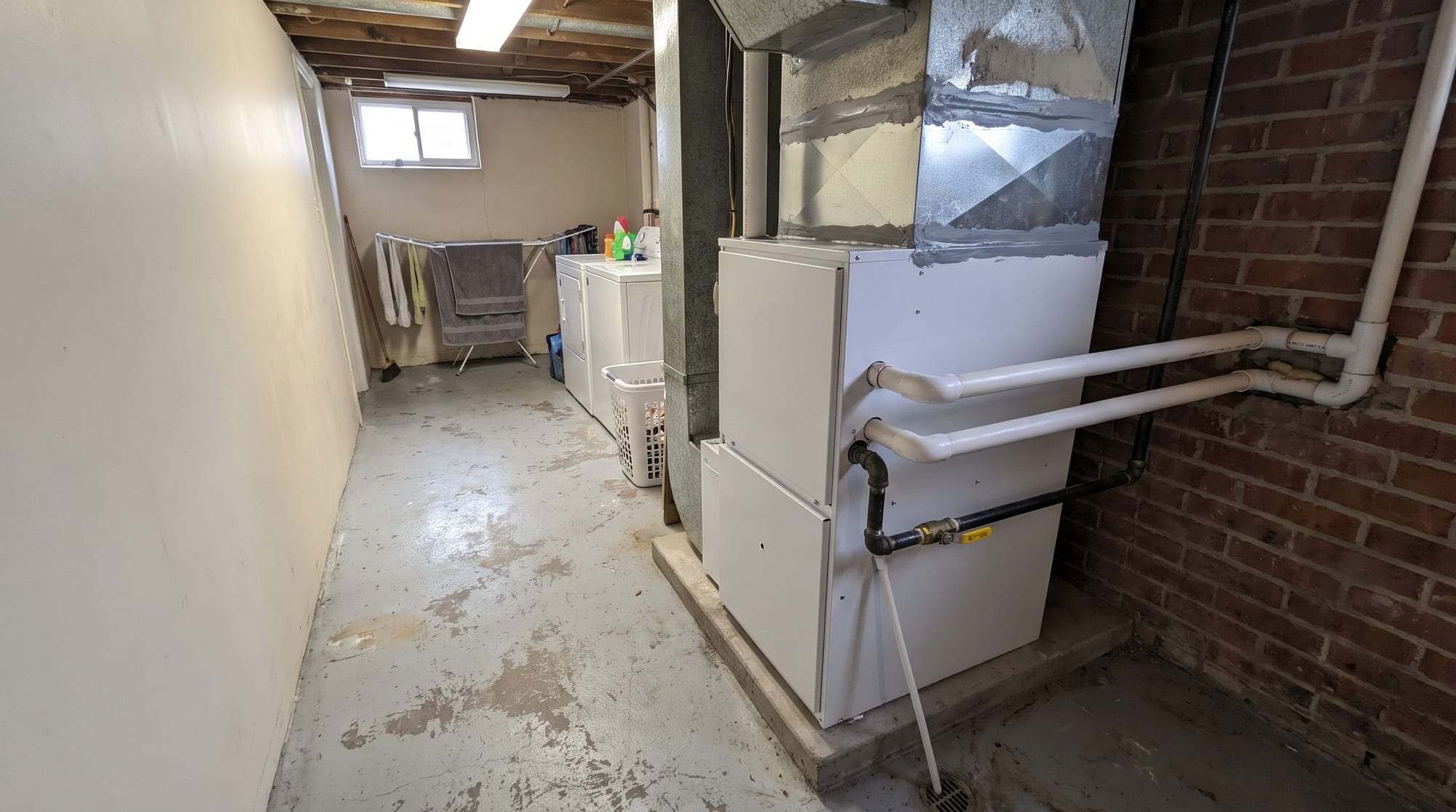
If you’ve already done these checks, or you’d rather not, request the repair now.
Five Safe Checks for a Furnace That Won’t Heat
Mark what each check showed, then press the button to see what to try next or whether to request a repair.
Mark each check and press Show What to Do Next.
What You See at the Furnace
| Sign | What it may mean | Safe for homeowner to try |
|---|---|---|
| Thermostat screen blank | Dead batteries, or the furnace has lost power and the thermostat with it. | Fresh batteries, then the breaker and the furnace switch. |
| Inducer motor hums, then the furnace stops without lighting | The pressure switch isn’t closing: a blocked vent or intake pipe, a clogged condensate trap or a failing inducer. | Clear snow from around the outside vent pipes by hand. Nothing inside the cabinet. |
| Burners light for a few seconds, then shut off | A dirty or failing flame sensor that can’t prove the flame. | Nothing: the sensor sits in the burner compartment. Note how many tries it makes. |
| Igniter glows or clicks, but no flame | Gas isn’t reaching the burners: a closed shutoff or a failed gas valve. | Look at the shutoff handle on the pipe. Never try to light the burners. |
| Blower runs and runs, air comes out cold | The fan is set to On, or the limit switch tripped from overheating behind a clogged filter. | Set the fan to Auto, change the filter and open closed registers. |
| Light blinking on the control board | A fault code that points to the part that stopped the furnace. | Count the blinks through the small window in the door and write them down. |
| Boiler on, radiators cold | Low water pressure, air in the system or a failed circulator. | Note the pressure gauge reading and whether the pump hums. Leave the valves alone. |
Details to Give When You Call
- The system type: gas furnace, boiler with radiators, heat pump or electric furnace.
- The model and serial number from the rating label, if you can read it without removing a panel.
- What the furnace does or doesn’t do: silent, hums, clicks, lights then shuts off, blows cold air, blinks a code.
- Your ZIP code, to confirm the house is inside the service area.
Protecting the Home While the Heat Is Out
- Close off unused rooms and keep the doors shut, so the warmth you have stays where people are.
- Open the cabinets on exterior walls under kitchen and bathroom sinks, and let those faucets drip.
- Keep the outside vent pipes clear of drifts after a lake-effect snow, so the furnace can run once it’s fixed.
- Avoid unsafe space-heater use: no extension cords, nothing within three feet, and never an oven, a gas range, a grill or a generator for heat: all of them can fill the house with carbon monoxide.
Waiting for the Repair Without Heat
Is it safe to run a space heater while the furnace is out?
It can be, if the heater has tip-over and overheat shutoff, plugs straight into a wall outlet and sits at least three feet from bedding, curtains and furniture. Never run one on an extension cord or power strip, and turn it off when you leave the room or go to sleep.
How long can the house go without heat before pipes freeze?
It depends on the cold outside and the house, not the clock. Pipes in outside walls, under sinks on exterior walls and in crawlspaces freeze first, often while the rest of the house still feels only cool. Open the cabinet doors on those walls, let those faucets drip, and shut the main water valve if the house has to sit empty and unheated.
Should I keep pressing the reset button on the furnace or boiler?
No. A furnace or boiler that keeps locking out has a safety control that tripped for a reason, and pressing reset again and again can push unburned fuel into the burner or hide a dangerous fault. Leave it off and book a heating repair.
What if the carbon monoxide alarm chirps instead of sounding?
A short chirp every minute or so usually means a low battery or an alarm at the end of its life; the date is printed on the back. A full alarm, loud and repeating, means leave the building and call 911 from outside. If anyone has a headache, dizziness or nausea while the heat is acting up, treat it as carbon monoxide and get outside.