
Furnace, Heat Pump and AC Care by Season in Cleveland
What to check on a furnace, heat pump or central air conditioner each season, and which jobs belong to a technician.
A Cleveland furnace runs hard from the first cold night to the last one in spring, and the air conditioner gets its own long stretch in summer. Most breakdowns on the worst day started small: an oxide-coated flame sensor, a clogged condensate trap, a filter left in for six months. A few minutes each season catches most of them, and a tune-up before the weather turns covers what a homeowner can’t see.
Maintenance Calendar by System
Pick your system to see its tasks for each season, with a box to tick for each one.
Pick your system and press Show the Calendar.
Homeowner and Technician Tasks by Season
Some care takes a new filter and five minutes. Some takes meters, a combustion analyzer and a panel off the equipment.
| Season | Homeowner tasks | Tasks for a technician |
|---|---|---|
| Fall | New filter, humidifier water on, a test run of the heat | Clean the flame sensor, check the igniter and burners, inspect the heat exchanger, measure gas pressure and temperature rise |
| Winter | Filter checked monthly, vents and the heat pump kept clear of snow | Faults as they appear: igniters, pressure switches, frozen condensate lines |
| Spring | Humidifier off, outdoor unit cleared, cooling tested on a mild day | Test the capacitor and contactor, check the refrigerant charge, clean the coil and the drain |
| Summer | Coil kept clear of fluff and clippings, drain pan watched | Repairs as needed: failed capacitors, iced coils, refrigerant leaks |
Fall Furnace Start-Up
Do this before the first cold night, not on it. A furnace that sat all summer has dust on the burners and the flame sensor, and its first long run shows what needs work.
- Put in a new filter with the arrow pointing toward the furnace.
- Raise the thermostat five degrees and listen: the inducer starts, the igniter glows or clicks, the burners light, then the blower follows.
- Expect a dusty smell for a few minutes. One that lingers, or smells like hot wiring, means shut the furnace off.
- Clear storage away from the furnace and the water heater; both need air to burn.
- Test the carbon monoxide alarms.
- Turn the humidifier water on, set its damper to winter, and fit a new water panel.
If the burners light and drop out after a few seconds, the flame sensor or the pressure switch is the usual cause: a heating repair to book before the cold sets in.
Winter Care
Lake-effect snow is the winter problem. A high-efficiency furnace vents through two PVC pipes on the side of the house, and when a drift covers them, the pressure switch shuts it down.
- Keep the intake and exhaust vents clear of snow and ice after every storm, about a foot all around.
- Check the filter monthly.
- Brush snow off a heat pump with a broom; never chip ice off the coil.
- A heat pump that steams and goes quiet for a few minutes is defrosting. One that stays packed in ice needs a technician.
- Turn the humidifier down if the windows fog or frost on the inside.
- Make sure the condensate line or pump still drains. A frozen drain line stops many high-efficiency furnaces.
If the furnace quits in a storm, work through the no-heat checks first. A blocked vent is one cause you can fix yourself.
Spring and Summer AC Care
Start the air conditioner on a mild day before the first hot week, so a weak capacitor or a clogged drain shows up while the house can do without cooling.
- Clear leaves, cottonwood fluff and grass clippings from the outdoor unit, and keep plants two feet back.
- Change the filter. A clogged one is the most common reason an evaporator coil ices over.
- Check the condensate drain at the indoor coil: the line runs clear, the pan stays dry, and the pump starts when water rises.
- Pour a cup of white vinegar into the drain line’s cleanout to keep algae from plugging it.
- Listen at the outdoor unit when it starts. A hum with no fan turning points to a capacitor.
- If ice forms on the refrigerant lines, shut cooling off and run the fan alone.
Keeping the Condenser Coil Clean
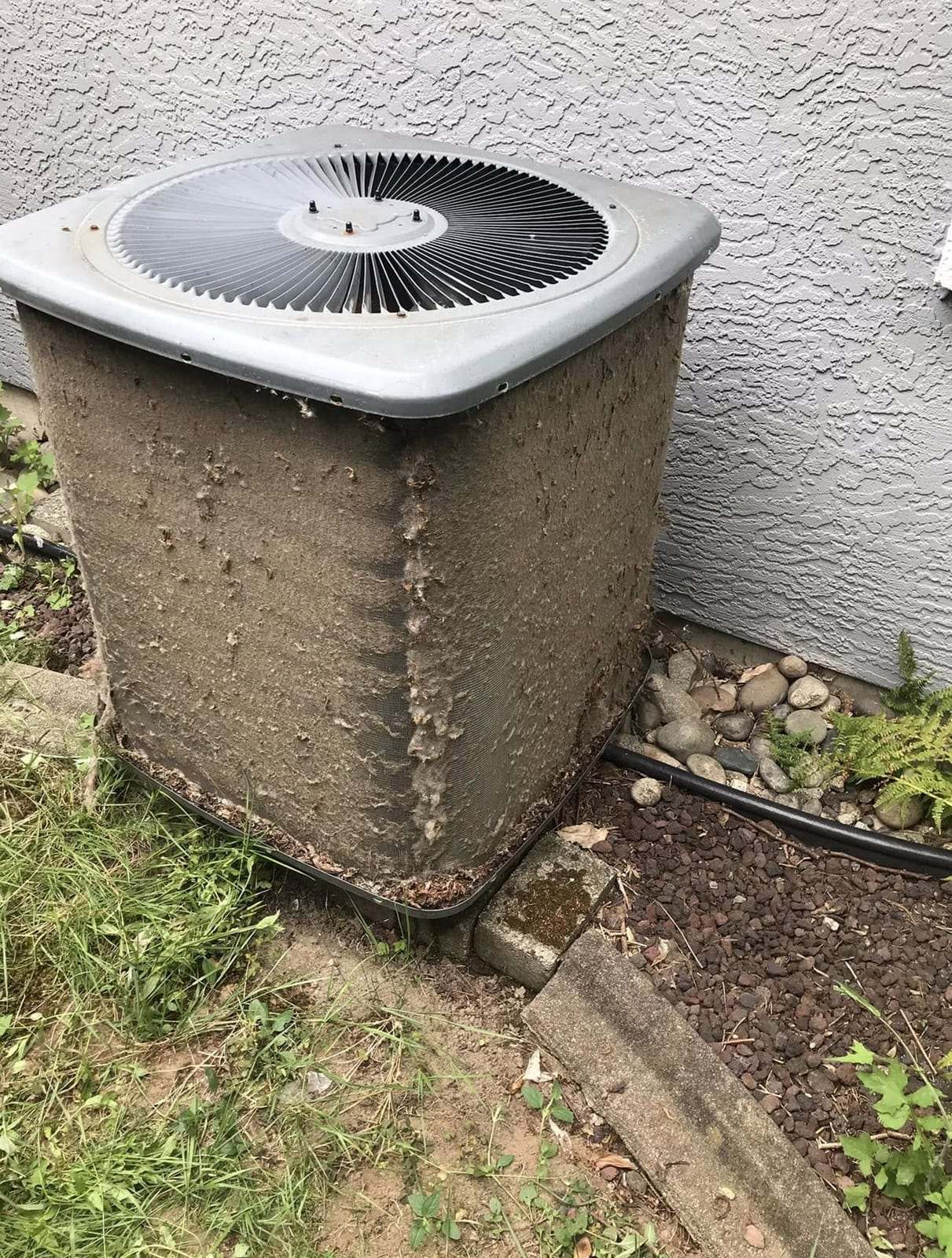
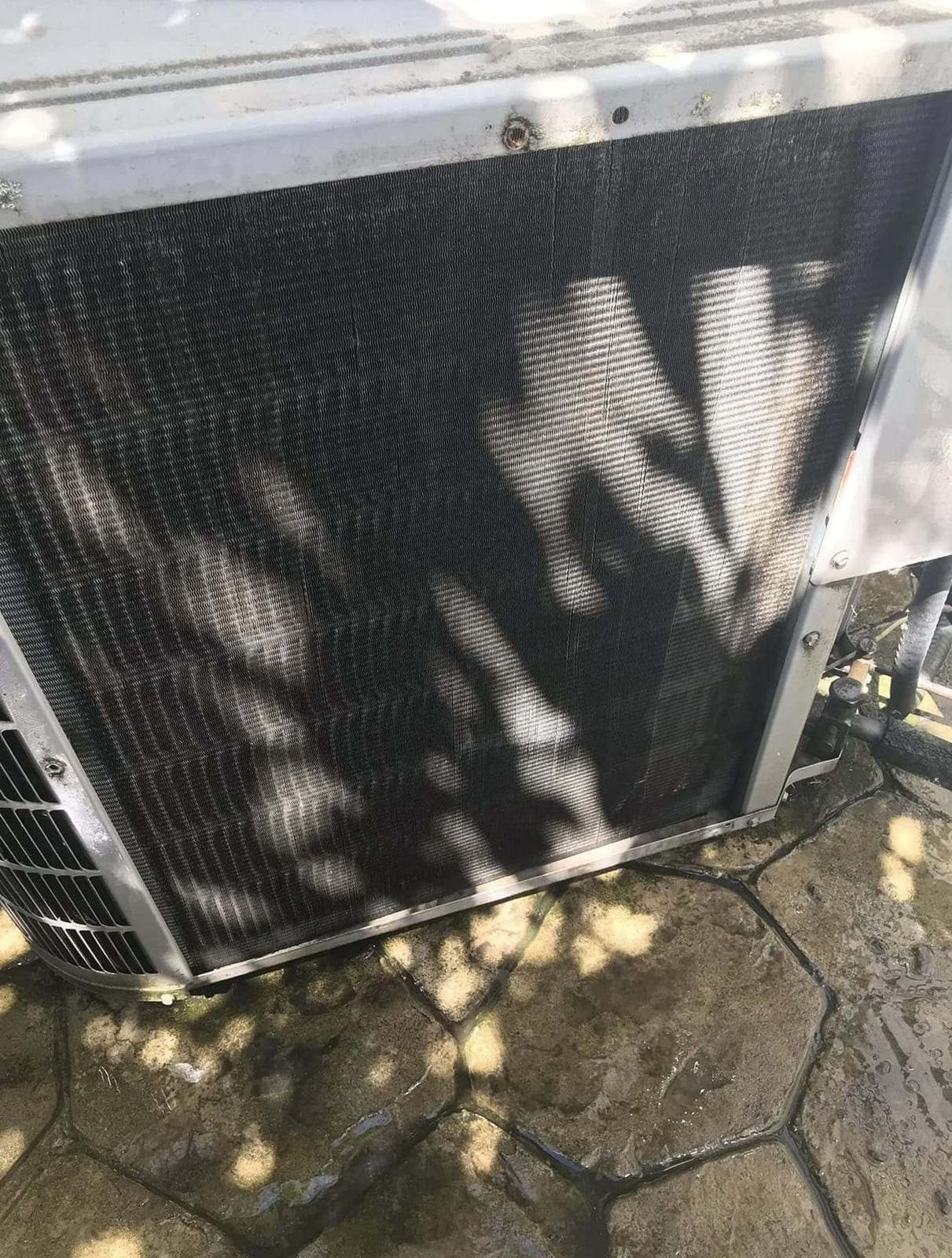
The outdoor coil sheds the heat pulled out of the house. Caked with dust, dryer lint and clippings, it can’t, so head pressure climbs, the compressor runs hotter and the capacitor wears out sooner.
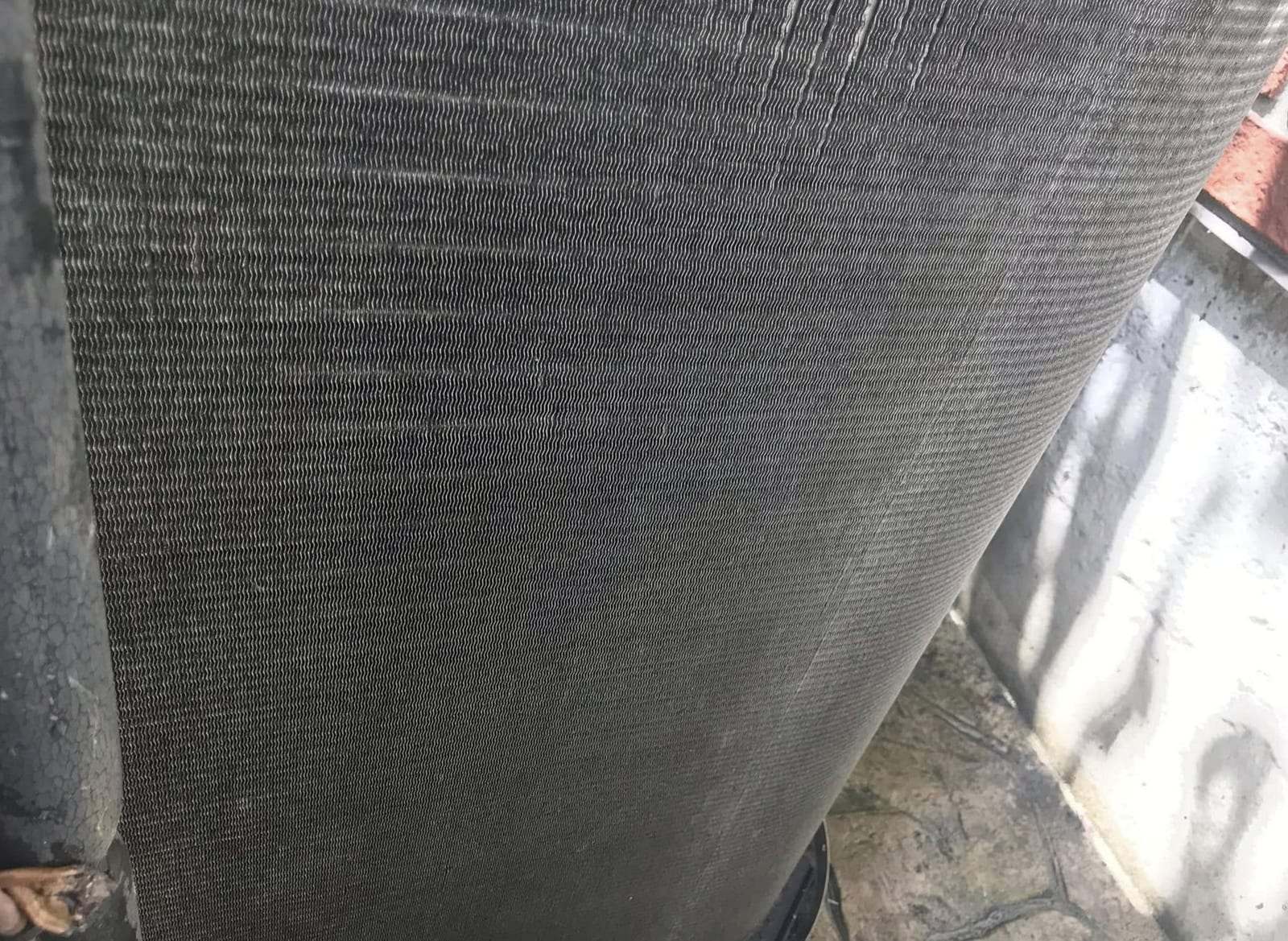
To rinse it, switch off power at the outdoor disconnect and spray the fins gently with a garden hose from top to bottom. Never use a pressure washer: it flattens the fins. Bent fins, a coil packed solid, or oily patches that point to a refrigerant leak are reasons to book an AC repair instead.
Filters and Humidifier Settings
How often should I change the furnace filter?
A 1-inch filter usually lasts one to three months, and a 4- or 5-inch media filter six months to a year. Check it monthly while the system runs, and sooner with pets or a renovation. A filter that looks gray all over is done, whatever the calendar says.
Does a higher MERV filter work better?
It catches finer dust, but a 1-inch filter rated MERV 11 or higher can choke the airflow on an older furnace with small returns. Low airflow shows up as a high temperature rise, a tripping limit switch or an iced evaporator coil. A 4- or 5-inch media cabinet gives finer filtration at a lower static pressure.
What should a whole-house humidifier be set to in winter?
Around 35 to 40 percent on mild winter days, and lower as it gets colder: near 25 percent when it is close to zero outside. Fog or frost on the inside of the windows means the setting is too high, and that moisture soaks window frames and attic sheathing.
What do I do with the humidifier in summer?
Shut off its water valve, set the bypass damper on the duct to its summer position, and turn the humidistat off. Put in a new water panel once a year; a pad crusted with minerals stops adding moisture.