
Heating and Cooling Services in Cleveland
Repairs, replacements and tune-ups for furnaces, boilers, central air and heat pumps, matched to the problem you have.
Archwood Heating & AC repairs and replaces the equipment that heats and cools houses, two-family rentals, storefronts and small offices across Cleveland: gas and electric furnaces, boilers, central air conditioners, heat pumps, the ductwork between them and the thermostats that run them. Most calls are one of three kinds of work: a repair, a replacement, or a tune-up before the season turns.
Repairs and New Systems
Heating Repair
Furnaces that won’t light, short-cycle or blow cold air, and boilers with circulator, pressure or ignition faults, traced to the failed part before anything is replaced.
AC Repair
Central air and heat pumps that blow warm, ice up the refrigerant lines, leave water by the furnace or trip the breaker, from capacitors and contactors to refrigerant leaks.
Replacement & Installation
New furnaces, central air conditioners and heat pumps for systems past saving, sized to the house and its ductwork rather than to the old unit’s label.
Ductwork, Thermostats and Tune-Ups
Ductwork repair and modification covers disconnected or leaking joints, crushed flex duct, undersized returns and new runs to a finished attic or basement room. Duct trouble usually shows up as one room that never warms or cools, a whistle at the registers, or a blower that sounds strained.
Thermostat installation ranges from replacing an old dial thermostat with a programmable one to wiring a thermostat for a heat pump, which needs the right terminals for the reversing valve and the backup heat. A thermostat wired wrong can look exactly like a failed furnace.
A seasonal tune-up checks a furnace before the first cold night and an air conditioner before the first hot week: burners, flame sensor, filter, coil, condensate drain and safety controls. Between visits, a few chores each season keep a system running cleaner.
Match the Problem to the Service
| Situation | Service | Where to Start |
|---|---|---|
| The furnace runs, but the house stays cold or it shuts off after a minute | Heating repair | Heating Repair |
| No heat at all, and the furnace seems dead | No-heat checks, then heating repair | No-Heat Checks |
| Radiators stay cold, or the boiler gauge reads low | Boiler repair | Boiler Repair |
| The air conditioner runs but blows warm, or ice forms on the lines | AC repair | AC Repair |
| Water on the floor by the furnace in summer | Condensate drain repair | Condensate Drains |
| A furnace or AC past saving, or a house adding central air | Replacement and installation | Replacement & Installation |
| Choosing between a furnace, a heat pump and ductless units | Comparing system types | System Options |
| One room always too hot or too cold | Ductwork repair or modification | Get on the Schedule |
| A thermostat that’s old, wrong for the system or won’t hold a setting | Thermostat installation | Call (216) 625-0420 |
| A check before the heating or cooling season | Seasonal tune-up | Maintenance Guide |
A Repair Starts With the Failed Part
Each repair visit starts by finding the part that actually failed. A furnace that won’t light, an air conditioner that hums and blows warm air, or a boiler that won’t circulate usually has one faulty part behind it, and replacing that part is the repair.
Replacement is a different job. It comes up when the fault sits in the part that makes the system what it is (a heat exchanger, a compressor or an old coil), or when a system near the end of its life is failing in more than one place. Then the question moves from one part to the whole house: how much heat it loses on the coldest night, how much it gains on the hottest afternoon, and how much air its ductwork can carry.
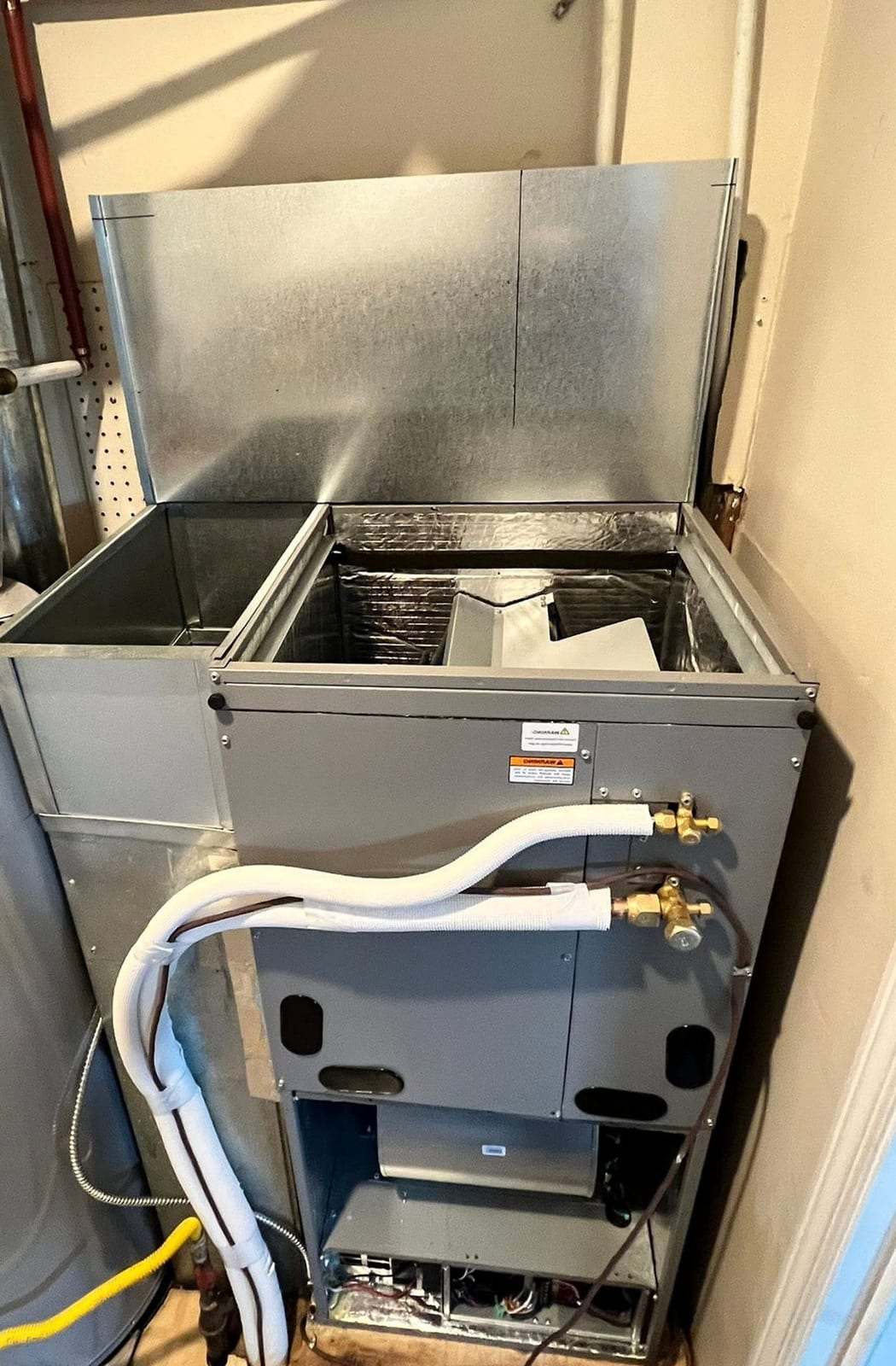
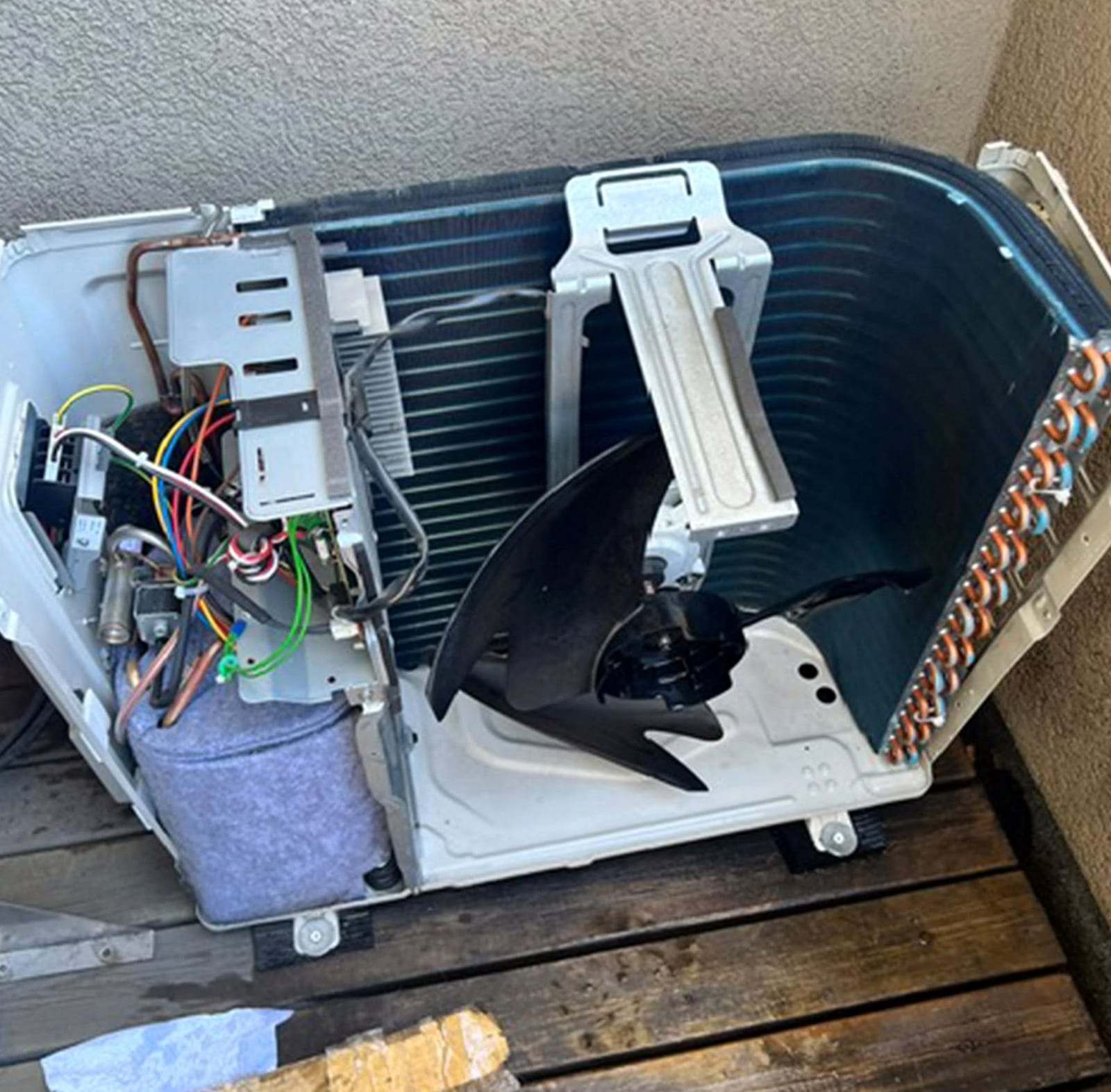
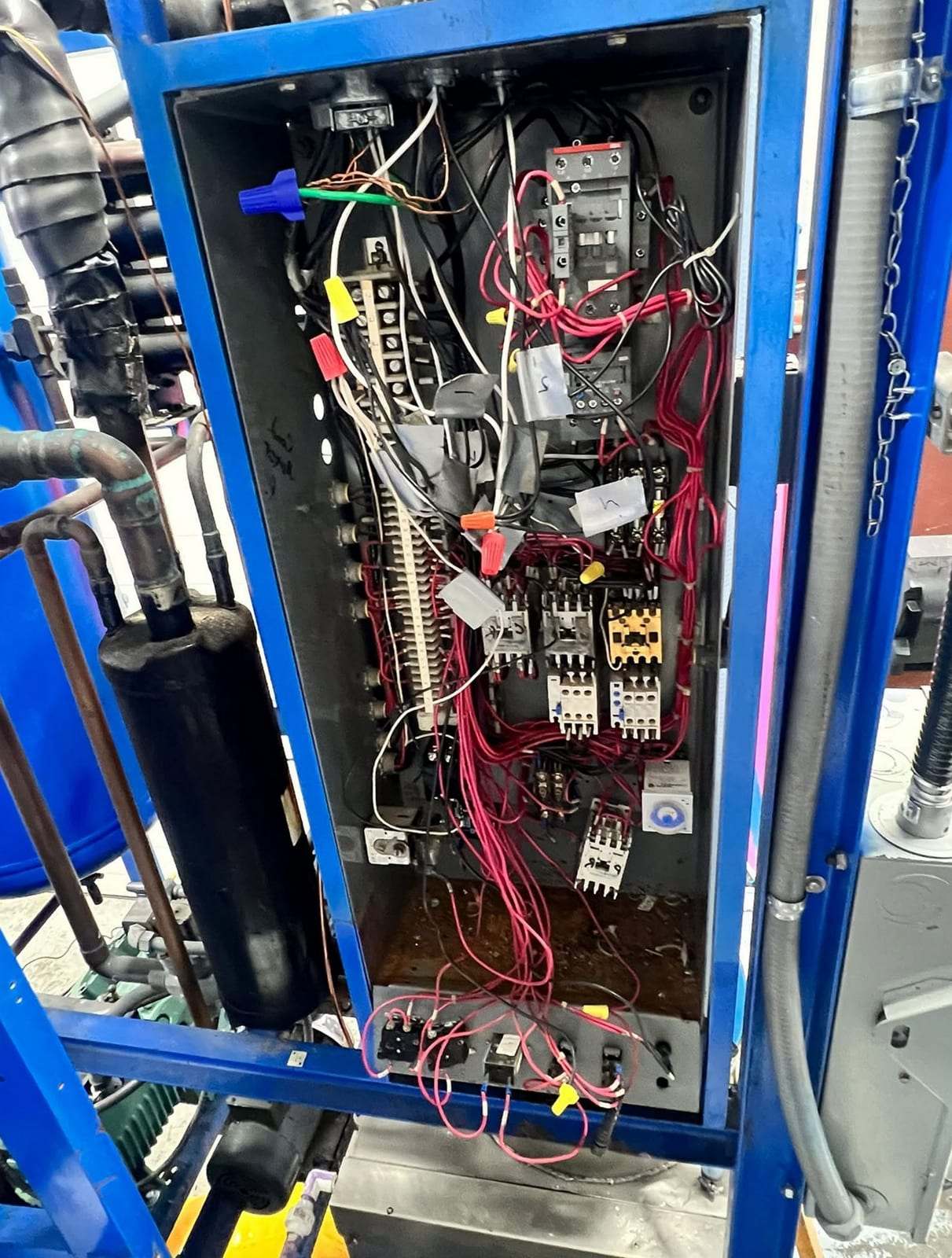
Houses, Doubles and Storefronts
Much of the work is in older houses: brick colonials, bungalows and double-doubles where a basement furnace feeds ductwork that several owners have changed over the years. Homeowners can match their kind of house and its comfort problem to a service.
Landlords of two-family rentals often have two furnaces, two thermostats and two sets of tenants to work around, and storefronts and small offices need heat that works in January. Rentals and small commercial buildings bring their own questions about access and several units.
Telling a Repair From a Replacement
How can I tell whether my system needs a repair or a replacement?
Most breakdowns trace back to one part: an igniter, a flame sensor, a capacitor, a contactor or a clogged condensate line. Those are repairs, even on an older system. Replacement comes up when the failed part is the heart of the unit, such as a cracked heat exchanger or a dead compressor, or when several different parts have failed in a few seasons.
Is a refrigerant leak a reason to replace my air conditioner?
Not always. A leak at a flare fitting, a service valve or a rubbed line set can usually be found and repaired. A leak in an old evaporator coil, especially on a system that runs on R-22, which is no longer produced in the United States, often makes a new matched system the better choice.
Should the furnace and air conditioner be replaced at the same time?
Often, but not by default. The indoor coil sits on the furnace and depends on its blower, so a new condenser on an old coil and blower may never reach its rating. If the furnace is young and sound, a matched coil and condenser can go in on their own; comparing system types helps when both are on the table.
Can a repair wait until a replacement is planned?
Sometimes. A weak capacitor or a coated flame sensor is a small repair that keeps a system running while you plan. A cracked heat exchanger or carbon monoxide in the flue is not something to run on. When the repair is large and the system is old, sizing the replacement first usually makes more sense.
Book a Repair, Replacement or Tune-Up
Pick the service, describe what the system is doing and leave a name and a number. We’ll book the visit.