
Our Process for Heating and Cooling Jobs
How a furnace, boiler, air conditioner or heat pump job moves from the first look to the last test, and the code rules behind it.
Lukas Colon started Archwood Heating & AC in 2012 and built its heating and cooling work around one habit: find the actual fault first. A furnace that lights and drops out usually has a dirty flame sensor or a failed igniter, and an air conditioner leaving water on the basement floor usually has a clogged condensate line. Each gets treated as the part it is, not written up as a new furnace or a new condenser.
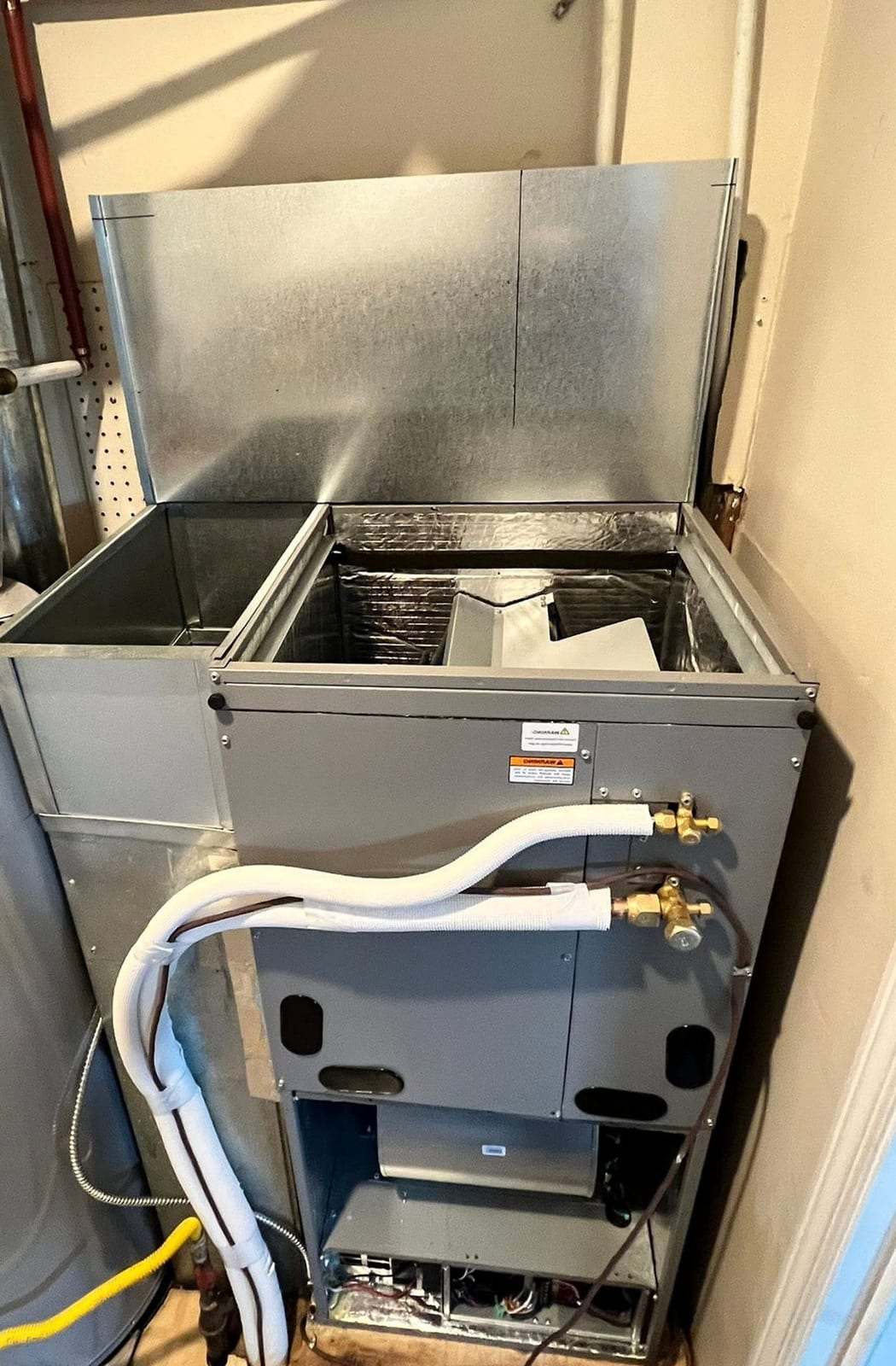
The same order holds from a one-part repair in a two-family house to a full furnace or AC replacement: assessment, options, the work, and testing, with code rules behind each part.
From Diagnosis to the Final Test
Assessment.
It starts with what the system is doing: no heat, short cycling, a rattle, warm air. Then meters, not guesses, until one part explains the symptom: voltage at the board, the pressure switch, the capacitor, the split across the coil.Options.
When the fault is one part, the repair is that part. When the equipment is past saving, such as a cracked heat exchanger, the choices are furnace or heat pump, which size, and what the ductwork can carry. Sizing comes from a load calculation such as Manual J, not from the old unit’s label.The Work.
A repair replaces the failed part and looks for what made it fail, such as a clogged filter behind an overheated limit switch. A replacement means disconnecting the old equipment, recovering its refrigerant, and connecting gas, venting, wiring, condensate and ductwork to the new unit.Testing.
A job is finished when the system has run a full cycle and the readings match the equipment label.
Codes and Safety Rules for HVAC Work
Gas, high voltage and refrigerant under pressure bring building, fuel gas and electrical codes and federal law into every job. The details vary by city.
| Area | Rule or requirement in general terms | What it means for the homeowner |
|---|---|---|
| Local permits and inspections | Most Ohio cities require a mechanical permit and an inspection to replace a furnace, boiler, air conditioner or heat pump. | Ask who applies for the permit, and plan for the inspector’s visit. |
| Gas piping and venting | Gas lines need a shutoff, a sediment trap and a leak test. The vent must suit the furnace: PVC for a high-efficiency model, metal vent or a lined chimney for an 80 percent one. | A new high-efficiency furnace can leave the water heater alone in an oversized brick chimney that then needs a liner. |
| Combustion air and flue clearances | A gas appliance needs enough air to burn, and its flue and vent terminals keep set distances from anything that can burn and from windows and doors. | Don’t shut a furnace in a small closet with a solid door. |
| Carbon monoxide alarms | Codes call for CO alarms near sleeping areas in homes with fuel-burning appliances or an attached garage. | Put one on each sleeping floor and one near the furnace, and replace them at the age printed on the back. |
| Refrigerant handling under federal rules | The Clean Air Act forbids venting refrigerant, and only technicians who have passed the EPA’s Section 608 exam may recover and handle it. | Refrigerant work is not a do-it-yourself job, and older R-22 systems rely on a shrinking supply. |
| Electrical disconnects and wiring | An outdoor unit needs a disconnect within sight, with the wire and breaker sized to its nameplate. | Never swap a tripping breaker for a bigger one; find the fault instead. |
| Condensate drainage | High-efficiency furnaces and cooling coils make water that must reach a drain or a condensate pump, and an attic coil needs a secondary pan or a float switch. | Keep the floor drain clear and the condensate line indoors, where it can’t freeze. |
| Minimum equipment efficiency | Federal rules set minimum efficiency for new furnaces, air conditioners and heat pumps. Cooling is rated in SEER2 and heat pump heating in HSPF2. | Compare the ratings for the matched indoor and outdoor pair. |
Tests Run at the End of a Job
These are the measurements the trade uses to show that a system is safe and working as designed. Each one catches a fault that an “it’s running” check misses.
- Combustion and carbon monoxide readings. An analyzer in the flue shows whether the burners mix gas and air correctly.
- Gas pressure. A manometer checks inlet and manifold pressure against the furnace label; wrong pressure means lazy flames or an overheated heat exchanger.
- Temperature rise. Supply air minus return air, compared with the range printed on the furnace. Too high means too little airflow.
- Airflow and static pressure. A manometer across the blower shows whether the ductwork lets it move the air the system needs.
- Refrigerant charge. Superheat and subcooling show whether an AC or heat pump holds the right charge; a short charge means a leak to find.
- Safety controls. The high limit, rollout switches, pressure switch and float switch are tripped on purpose to confirm they shut the system down.
Electrical Checks on Cooling Equipment
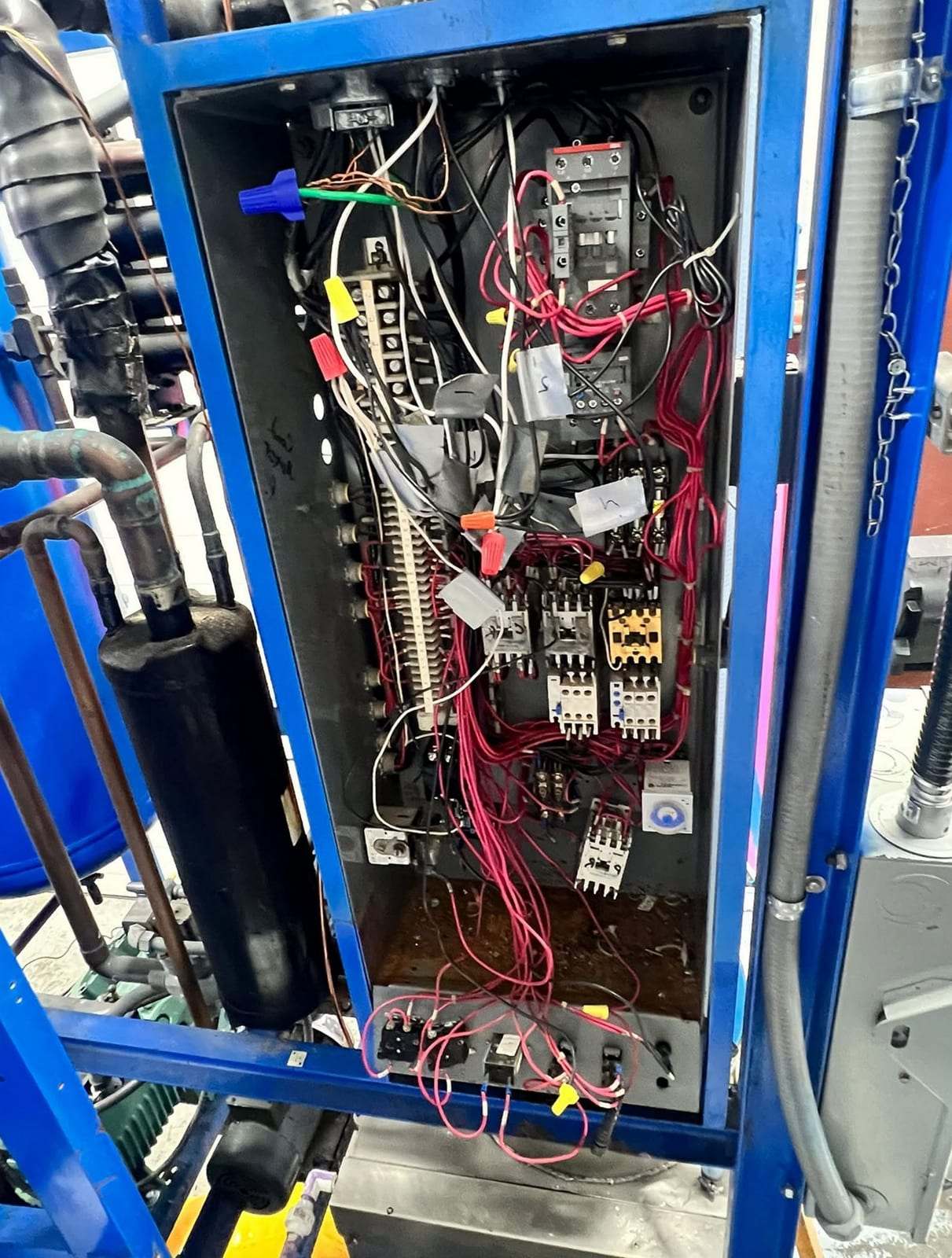
On cooling equipment, the contactor is checked for pitted points, the capacitor against its rated microfarads, and the compressor and fan amp draw against the nameplate. A weak capacitor rarely fails on a mild day; it fails on the hottest afternoon of the year.
Permits and Inspections for a Replacement
Does replacing a furnace need a permit in Ohio?
In most Ohio cities, yes: a furnace or boiler replacement takes a mechanical permit, and new gas piping or a new circuit can need its own. The building department where the house sits has the final word.
Who applies for the permit on a replacement?
In most cities the contractor doing the installation applies, because the permit names who does the work. Ask about it before the job is booked; work done without one can come up when the house is sold.
What does the inspector look at?
Mostly safety: the vent and its slope, the gas connection and shutoff, clearances, the electrical disconnect, carbon monoxide alarms and the condensate drain. Someone usually needs to be home to let the inspector in.
Is a heat pump installation inspected the same way as a furnace?
Largely, with the refrigerant lines, the outdoor disconnect and the circuit size added. A dual-fuel system, a heat pump paired with a gas furnace, is checked on both the gas side and the electrical side.