
AC and Heat Pump Repair in Cleveland
How central air and heat pump cooling faults are traced and fixed, and the checks to make before you call.
A central air conditioner is two halves joined by a copper line set: the outdoor condenser with its compressor, fan motor, capacitor and contactor, and the indoor evaporator coil that sits on top of the furnace or air handler. A heat pump uses the same parts and runs them in reverse for heat. Most cooling calls come down to a short list: a failed capacitor, a burned contactor, a clogged condensate line, a dirty coil or a refrigerant leak. The visit starts by finding which one it is.
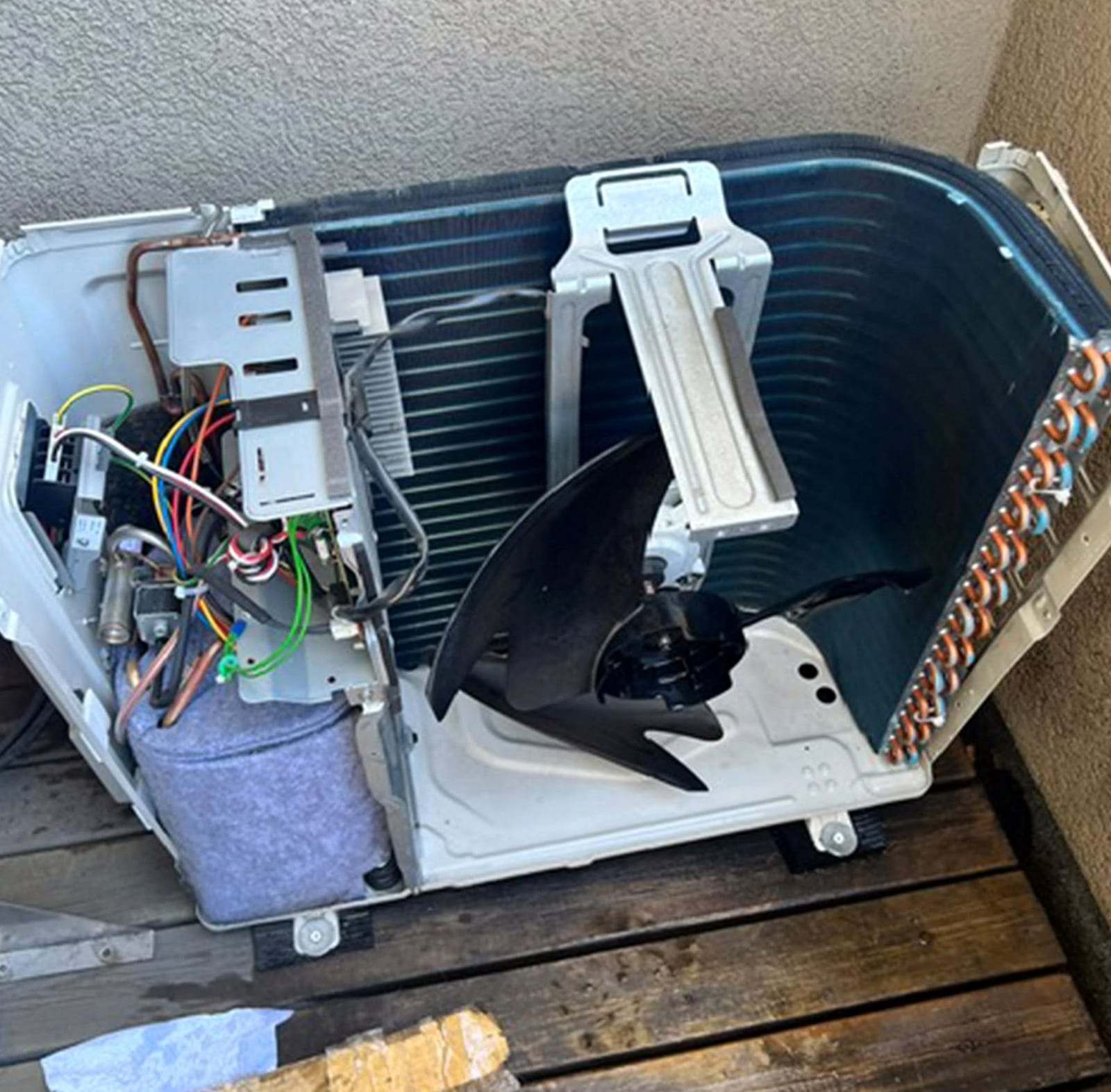
Common Cooling Problems
| Symptom | Likely cause | Can the homeowner check it | When to book a technician |
|---|---|---|---|
| Outdoor unit hums but the fan doesn’t spin | A failed run capacitor or fan motor | Look, but don’t touch: a capacitor holds a charge even with the power off | Turn cooling off and book: a stalled fan overheats the compressor |
| Indoor fan runs, outdoor unit silent | A tripped breaker, a failed contactor, a cut thermostat wire or a float switch stopping a full drain pan | Yes: the breaker and the disconnect box by the unit | If the breaker trips again after one reset |
| Air is cool, but the house won’t come down | A dirty condenser coil, a clogged filter, low refrigerant or a system too small for the house | Yes: change the filter and rinse the outdoor coil with the power off | If it still can’t keep up on a mild day |
| Ice on the copper lines or the indoor coil | Low airflow from a dirty filter, closed registers or a dirty coil, or a low refrigerant charge | Yes: run the fan alone until the ice melts, then change the filter | If the ice comes back |
| Water on the floor by the furnace | A clogged condensate line or trap, a cracked drain pan or a failed condensate pump | Yes: check the pump and clear the drain at its cleanout with a wet vacuum | If the pan is cracked or the pump won’t run |
| Heat pump blows cool air in heat mode | A stuck reversing valve, a defrost control fault or low charge | Yes: confirm the thermostat is on Heat; a few minutes of cool air during defrost is normal | If it lasts longer than a defrost cycle |
Five Checks Before You Call
- Thermostat: on Cool, a few degrees below room temperature, fan on Auto, fresh batteries if it uses them.
- Filter: a clogged filter starves the indoor coil of air and is the most common cause of ice on the lines.
- Breakers: one for the furnace or air handler, usually a double breaker for the outdoor unit, and a disconnect box on the wall beside the condenser.
- Outdoor unit: clear leaves, grass clippings and cottonwood fluff from the coil, and keep about two feet open around it.
- Drain: a full drain pan or condensate pump can trip a float switch that shuts the system off on purpose.
If all five look right and the system still won’t cool, turn it off at the thermostat and leave it off. Running a compressor with a stalled fan, a frozen coil or a low charge is how a repair turns into a replacement.
Dirty Condenser and Evaporator Coils
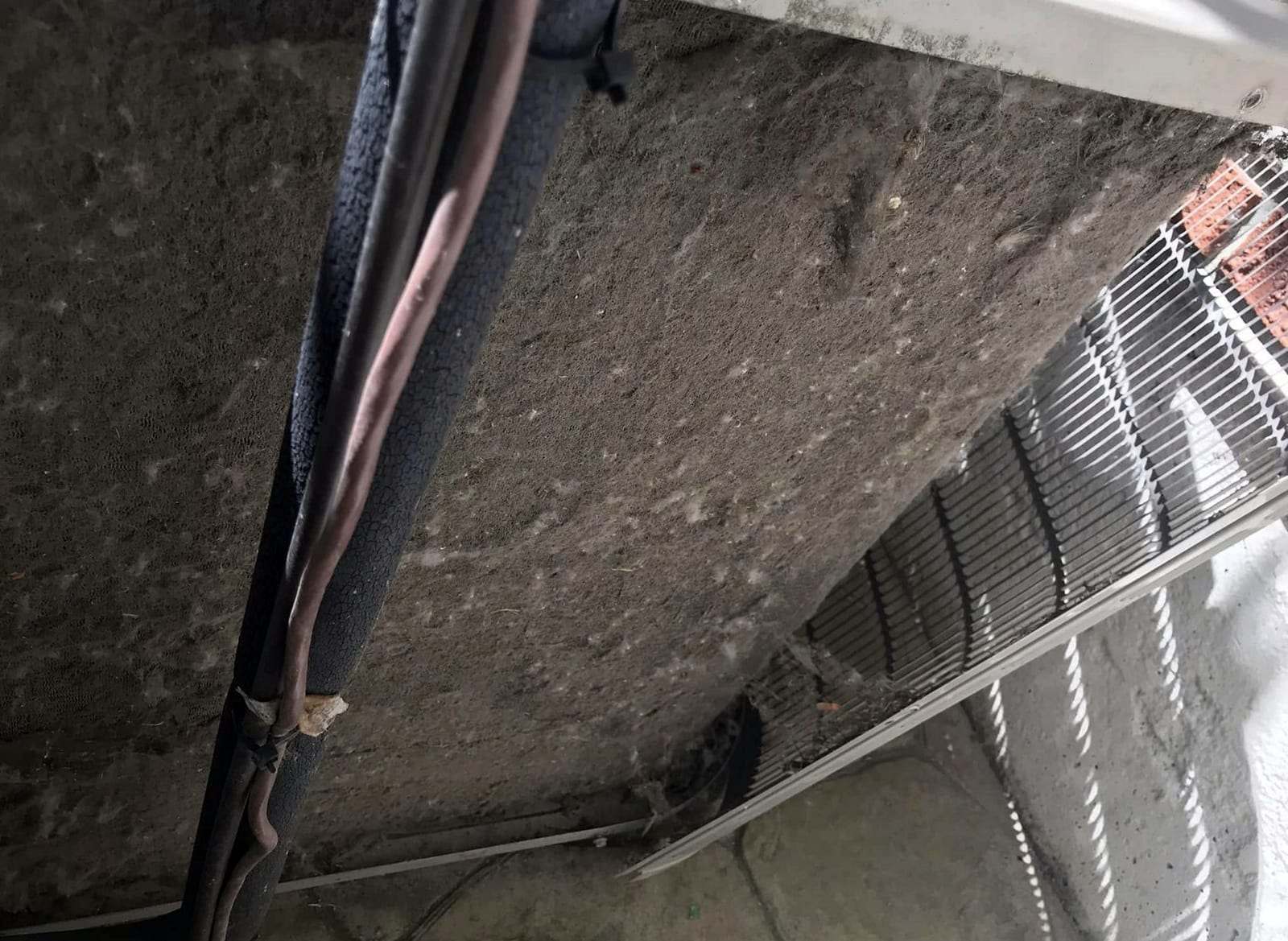
The outdoor coil gives off the heat taken out of the house. When dust, lint, grass and fluff mat over the fins, the coil can’t shed that heat, head pressure climbs, and the compressor runs hotter and longer for less cooling. A gentle rinse from the inside out with a garden hose, power off, helps a lightly dirty coil; a matted one needs coil cleaner and a fin comb.
The indoor evaporator coil catches whatever the filter misses. A dirty one cuts airflow and can freeze, and its drain pan and condensate trap are where clogs start. Cleaning it means opening the coil cabinet above the furnace.
Capacitors, Contactors and Refrigerant Leaks
The run capacitor gives the compressor and fan motor the push to start, and heat wears it out; a capacitor with a swollen top is one of the most common failures in a humid July. The contactor is the switch the thermostat closes to start the outdoor unit. Pitted contacts, or ants nesting between them, can leave it stuck open, so nothing runs, or stuck closed, so the unit runs with the thermostat off.
An air conditioner doesn’t use up refrigerant. Low charge means a leak, so adding refrigerant without finding the leak only buys a season. Leaks turn up at flare fittings, service valves, rubbed line sets and corroded evaporator coils, and federal rules set how refrigerant is recovered and handled while the leak is repaired.
Warm Air, Ice and Short Cycling
Why is my air conditioner running but blowing warm air?
Check the outdoor unit first. If its fan isn’t spinning or the unit is silent, the cause is usually a capacitor, a contactor or a tripped breaker. If it runs but the air is barely cool, a dirty coil, a clogged filter or a refrigerant leak is more likely.
Why is there ice on the copper line by the outdoor unit?
Ice means the indoor coil is running too cold, from too little airflow or too little refrigerant. Switch the thermostat to Fan only until the ice melts, then change the filter. If it ices again, the charge or the blower needs a technician, because running it frozen can send liquid refrigerant back to the compressor.
Why does my air conditioner turn on and off every few minutes?
Short cycling comes from a system too large for the house, a thermostat in the sun or by a supply register, low refrigerant, or a failing capacitor or control. An oversized unit cools the air before it can pull out the moisture, so rooms feel cold and clammy. When the unit itself is too big, sizing the next one to the house is the lasting fix.
Is frost on a heat pump in winter the same problem?
No. A heat pump in heating mode frosts over in cold, damp weather and clears it with a defrost cycle, sometimes with a cloud of steam. A unit locked in ice that never clears, or ice on the lines in summer, is a fault to book.